For the first time in Canada, blood stem cells were genetically modified using CRISPR-Cas9 technology and subsequently injected into patients as part of a North American clinical trial targeting acute myeloid leukemia (AML) and myelodysplastic syndrome (MDS). Every graft used in this landmark study was produced in Montreal, at Hôpital Maisonneuve-Rosemont, through the biomanufacturing expertise of C3i Center at the Centre d’excellence en thérapie cellulaire (CETC).
The results of this Phase I/II clinical trial were published on May 12, 2026, in Nature Medicine, one of the world’s leading biomedical journals. This achievement marks a decisive step forward in precision medicine and cell therapy, and positions Montreal and C3i Center as an international leader in the production of gene-edited cellular therapies.
This study was supported by Vor Biopharma, which was involved in the study design, data collection, data analysis, data interpretation and writing of all related reports and publications.
What Is the Study and Why Does It Matter?
The clinical trial, entitled “CRISPR-Cas9 CD33-deleted allogeneic hematopoietic cell transplantation with gemtuzumab ozogamicin maintenance in AML,”, was conducted across 15 sites in the United States and Canada. It was led internationally by Dr. John F. DiPersio of Washington University School of Medicine in St. Louis, with Dr. Léa Bernard serving as the Principal Investigator for Canada.
Dr. Bernard is a hematologist-oncologist at the Institut universitaire d’hématologie-oncologie et de thérapie cellulaire (IHOT) at Hôpital Maisonneuve-Rosemont, and an assistant clinical professor at the Université de Montréal Faculty of Medicine.
The study enrolled 30 adult patients with AML or MDS who faced a high risk of relapse after standard treatment. These are among the most aggressive and difficult-to-treat blood cancers, for which stem cell transplantation is often the last curative option, yet even then, relapse rates remain dangerously high.
Preventing recurrence without harming healthy cells: CD33, a double-edged therapeutic target.
Why Existing Treatments Fall Short
In many cases of acute leukemia, stem cell transplantation is the only path to remission. However, the cancer frequently returns even after a successful graft. The new generation of targeted immunotherapies offers great promise in preventing relapse, but they face a fundamental biological obstacle: the protein CD33.
CD33 is expressed on the surface of myeloid cancer cells, but it is also found on healthy blood-forming cells. Any therapy designed to attack CD33-positive cells therefore risks destroying normal blood cells alongside cancerous ones, causing serious and potentially life-threatening side effects. This toxicity has historically limited the use and effectiveness of CD33-targeted treatments after transplantation.
The CRISPR-Cas9 Solution: Making Healthy Cells Invisible to Treatment
The study’s central innovation is to use CRISPR-Cas9 gene editing, a technology often described as “molecular scissors”, to permanently remove the CD33 gene from donor stem cells before transplantation. Once these edited cells engraft and rebuild the patient’s blood system, the healthy blood cells no longer carry CD33. They become invisible to CD33-targeted therapies.
This creates a crucial therapeutic window: physicians can now administer powerful CD33-directed treatments after the transplant to eliminate any remaining cancer cells, without risking harm to the patient’s reconstituted blood system.
The gene-edited stem cell product used in this trial is called tremtelectogene empogeditemcel, or trem-cel, developed by Vor Biopharma. After transplantation, patients also received gemtuzumab ozogamicin, an FDA-approved CD33-targeting antibody-drug conjugate, as maintenance therapy, a combination that would not have been safely possible without the prior gene editing.
C3i Center’s Role: Manufacturing the Future of Cell Therapy in Montreal
A Canadian and International First
This clinical trial represents a historic milestone for Canada. It is the first time that CRISPR-edited stem cells were produced in a Canadian laboratory and administered to human beings as part of a regulated clinical trial. What makes this achievement even more significant is its scale: all grafts used across the entire North American trial, for patients at 15 different clinical sites, were manufactured in Montreal.
This was made possible by the combined expertise of C3i Center and the Centre d’excellence en thérapie cellulaire (CETC), both located at Hôpital Maisonneuve-Rosemont.
What This Demonstrates About C3i’s Capabilities
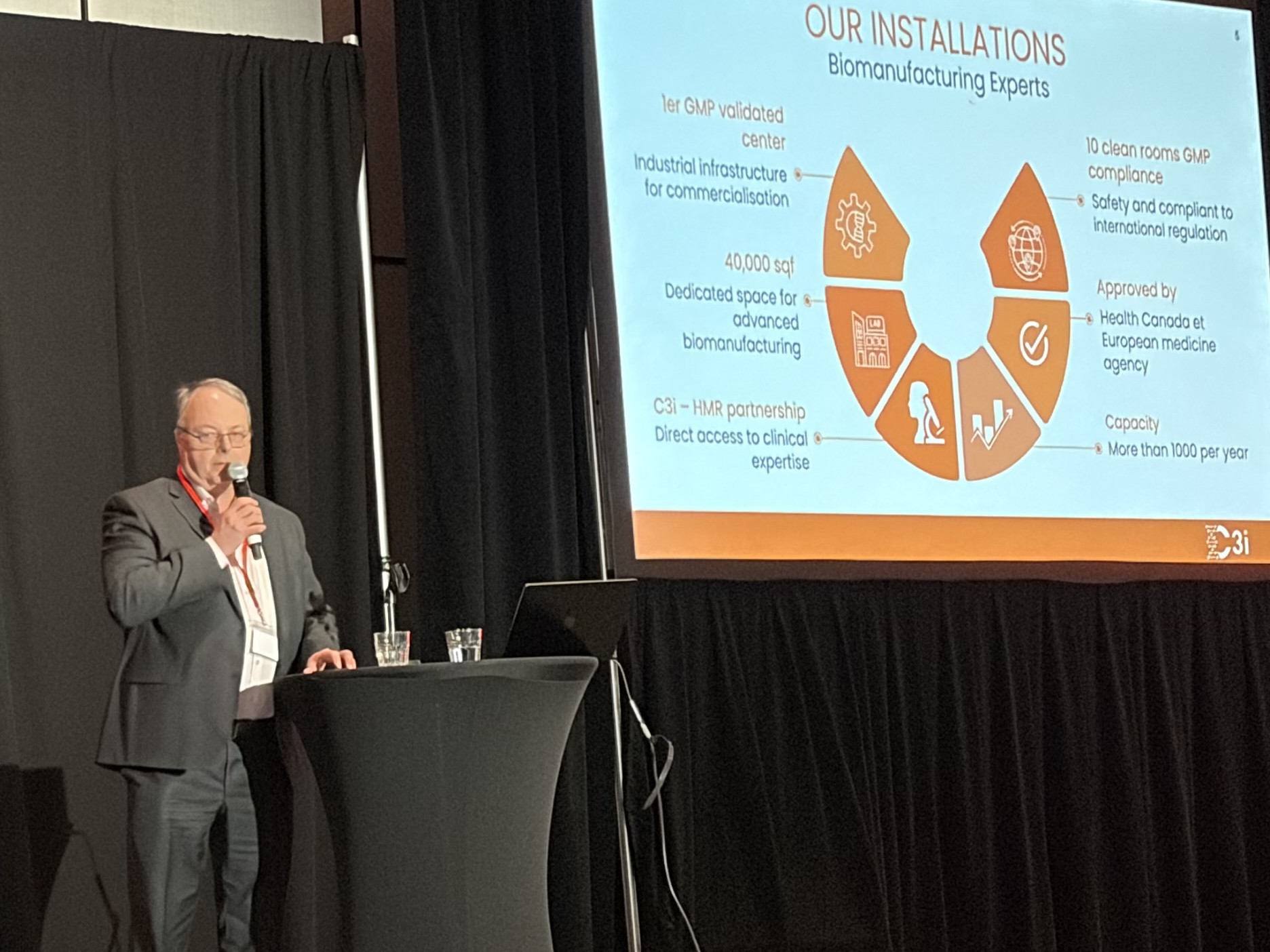
Producing gene-edited cellular therapies for a multi-site international clinical trial is technically and regulatorily demanding. It requires state-of-the-art biomanufacturing infrastructure, rigorous quality control, compliance with clinical-grade manufacturing standards, and a team with deep expertise in advanced cell engineering and manufacturing.
C3i Center met all of these requirements, establishing Montreal as a credible and capable hub for producing next-generation cell therapies, not just for Canadian patients, but for patients across North America.
As noted by the teams at Hôpital Maisonneuve-Rosemont: “This demonstrates our expertise in producing modified cells and the potential international reach of this know-how.”
The Broader Significance for Montreal’s Biomedical Ecosystem
This study demonstrates how precision medicine, cell therapy manufacturing, and gene editing can work together to improve patient outcomes and Montreal’s growing role at the forefront of that transformation. It signals to collaborators, investors, and clinical partners worldwide that C3i Center has the infrastructure, expertise, scientific leadership, and rigor to take on the most complex challenges in cell and gene therapy.
Study Results at a Glance
- 30 patients enrolled with high-risk AML or MDS
- 15 clinical sites across the United States and Canada
- All gene-edited stem cell grafts produced at Hôpital Maisonneuve-Rosemont in Montreal
- First CRISPR-edited stem cells produced and administered to humans in Canada
- Published in Nature Medicine on May 12, 2026
References and Further Reading